
nominating lgbtq sites to the
National register of historic places
Buildings associated with Kentucky's LGTBQ history are poorly represented on the National Register of Historic Places.
This project will change that.
Over the next three years, FMA will work with the Blue Grass Trust for Historic Preservation to nominate ten LGBTQ sites in Kentucky to the National Register. These sites will be identified through statewide community input, local surveys, and collaboration with area historians.
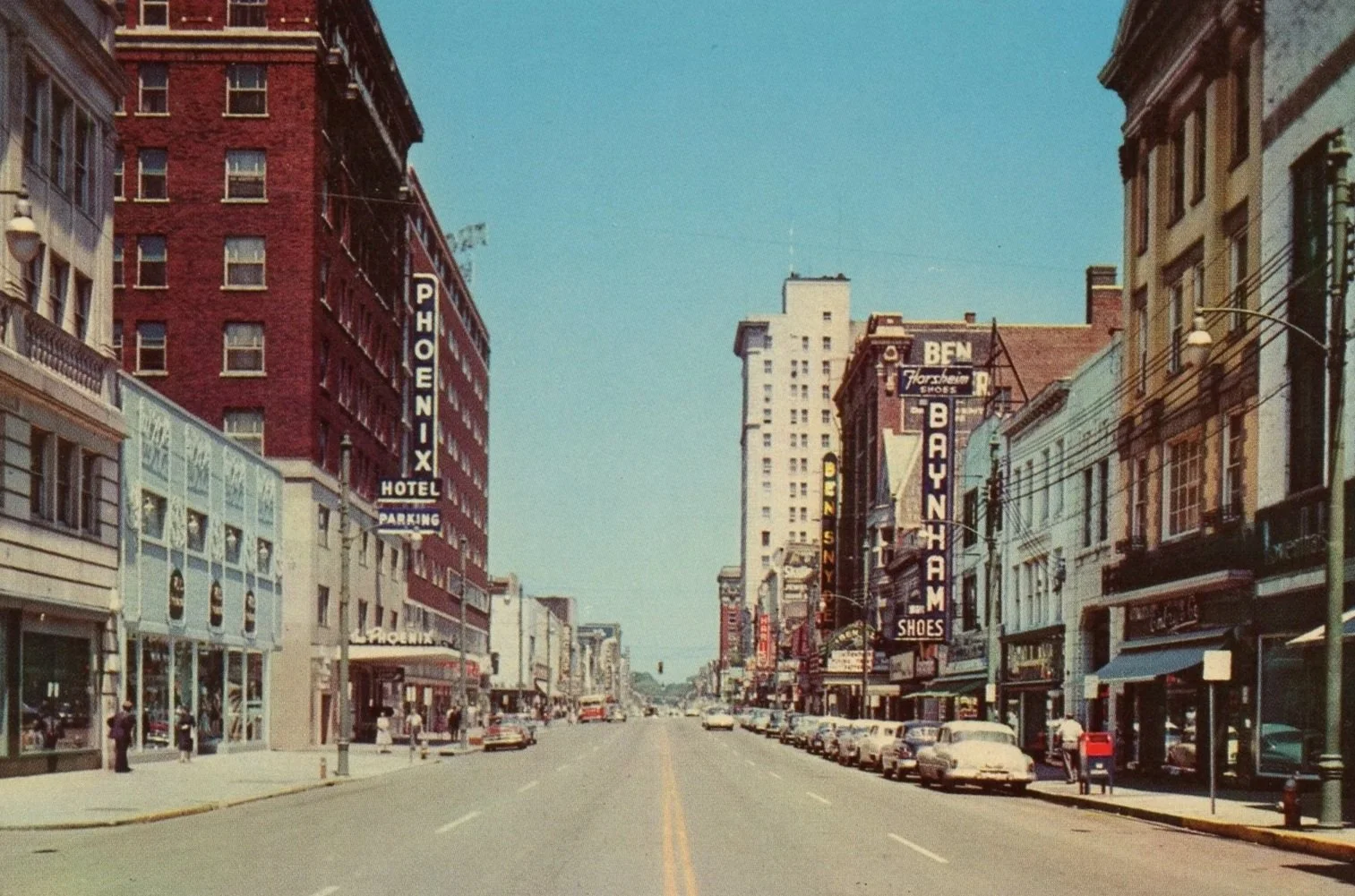

Kentucky is uniquely positioned for this effort. In 2016, FMA co-authored a statewide LGBTQ Historic Context Narrative—a critical prerequisite for nominations—that included an appendix of eligible buildings. While no nominations have yet been submitted, this project allows us to finally act on this groundwork, increasing visibility and recognition for LGBTQ sites while making them eligible for key state and federal rehabilitation tax credits and preservation grants.
While designation does not protect the property from demolition or empower any governmental agency to exercise regulatory control over it, there are compelling reasons for pursuing this landmarking. Owners of National Register properties—both residential and income-generating—may be able to claim state and/or federal historic tax credits for rehabilitation projects. Additionally, some “brick-and-mortar” grants are only earmarked for buildings on the Register. And any federally-funded action that may impact a resource on the National Register triggers what is known as a Section 106 review, which is intended to mitigate adverse effects to historic assets.
WHAT IS THE PROCESS?
-
This project depends on community input from people like you! While FMA works out of Lexington, we want to ensure that these 10 historic sites represent the broad geographical range of Kentucky’s LGBTQ History.
There are two primary methods to propose locations as potential sites for nomination as part of this project. Firstly, FMA will host community listening sessions in regions across the commonwealth to ensure that every Kentuckian from Paducah to Pikeville can use their voice and advocate for their local LGBTQ history. Events will be shared on our social media and our events webpage.
Secondly, we have an online form that is accepting submissions 24/7. On this form, anyone can submit a building that they think would be a viable candidate for a National Register nomination. You can fill out the form here!
Have any questions? Don’t hesitate to reach out to us at info@faulknermorgan.org.
-
Information from the Kentucky Heritage Council
According to National Park Service guidelines, properties eligible for National Register listing must be at least 50 years old; or if they are not, they must be of exceptional importance. To qualify for the National Register, properties must possess integrity of location, design, setting, materials, workmanship, feeling and association and meet one of four criteria for evaluation of significance:
Properties associated with events that have made a significant contribution to the broad patterns of our history.
Properties associated with the lives of persons significant in our past.
Properties that embody the distinctive characteristics of a type, period, or method of construction, or that represent the work of a master, or that possess high artistic values, or that represent a significant and distinguishable entity whose components may lack individual distinction.
Properties that have yielded, or may be likely to yield, information important in prehistory or history.
HAVE ANY SITES IN MIND?
LET US KNOW!